
Why Karuppatti Is Added While Pressing Nallennai
The old chekku method adds a fistful of Palm Jaggery to the sesame seeds. It is not for sweetness. Here is the practical reason behind the tradition.
What actually happens between a sack of groundnuts arriving at our door in K.Pudur and a sealed bottle leaving for your kitchen.
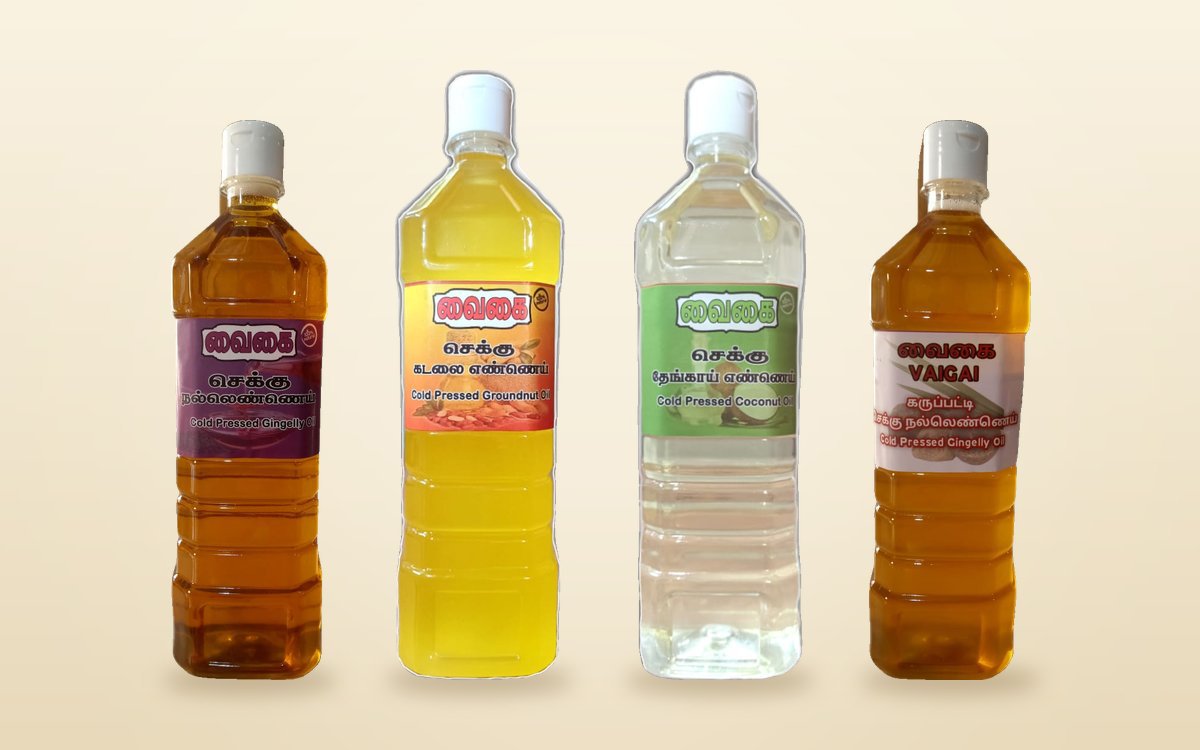
Our mill sits on Govindhan Street in K.Pudur, Madurai, opposite Mary Ann School. It is not large – a few wooden chekkus, a settling area, a small packing room – and that is the point. Here is a typical day.
Groundnuts, sesame and copra come from farmers and traders in the districts around Madurai, Virudhunagar and Tirunelveli. Every sack is opened, smelled and inspected. Damp, mouldy or shrivelled seeds are rejected on the spot – bad seed makes bad oil, and no amount of filtering fixes it.
Seeds are sieved to remove stones and dust and spread in the sun for a few hours if they carry any moisture. Dry seeds press cleaner and the oil keeps longer.
The chekku is loaded with 15–20 kg of seed. For groundnut, a fistful of karuppatti and a little water go in for the karuppatti variety. The press turns slowly for about an hour. Oil trickles into a steel vessel below; the cake (punnakku) is scooped out and sold as cattle feed.
Fresh oil rests in covered vessels for a day so the heavier particles sink. It is then filtered through clean cloth. No chemicals, no heat, no centrifuge.
Oil is filled into food-grade bottles and cans – 200 ml, 200 ml, 500 ml, 1 L, 5 L and 15 kg tins – capped, sealed and labelled with the batch number, packing date and use-by date. Orders from the website are packed, cushioned and handed to the courier by evening.
You are welcome to visit during working hours and see all of this for yourself. Bring an empty can – many neighbours do.
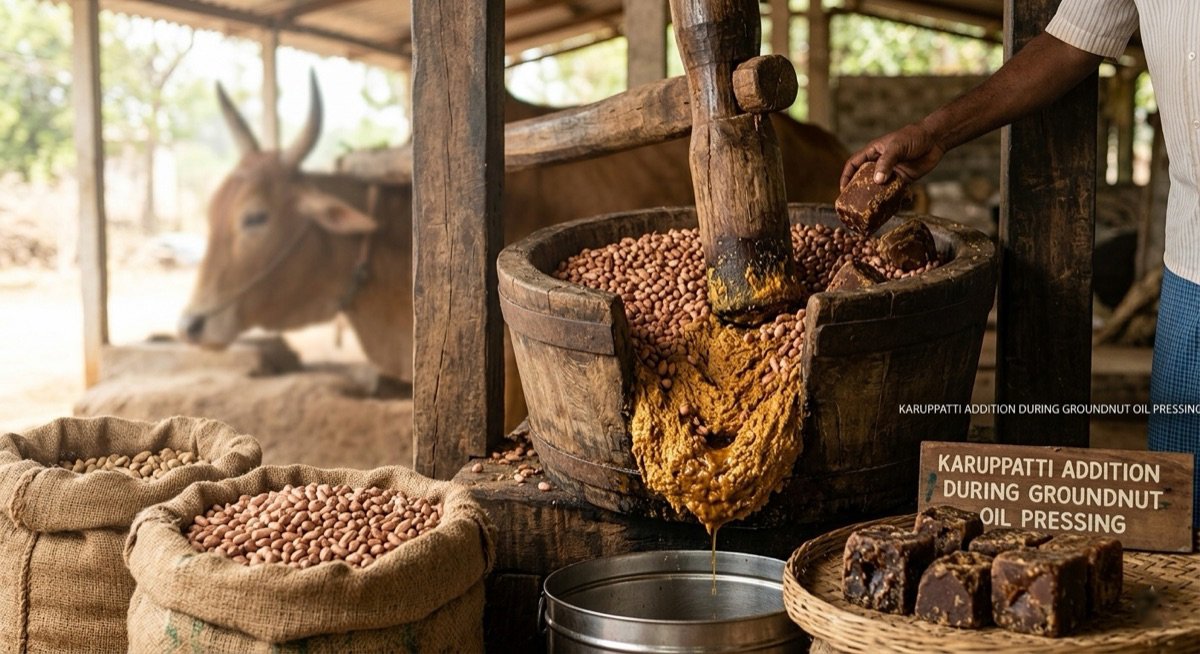
The old chekku method adds a fistful of Palm Jaggery to the sesame seeds. It is not for sweetness. Here is the practical reason behind the tradition.
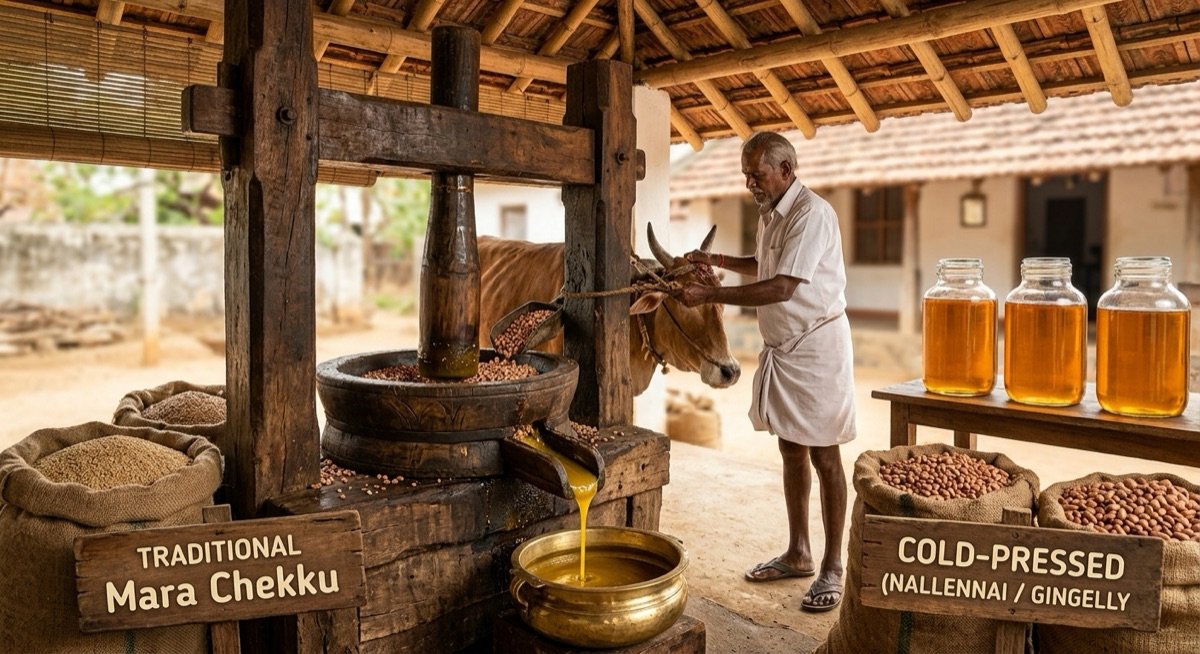
Chekku oil is pressed slowly in a wooden press without heat or chemicals. Here is what actually happens inside the press and why the result tastes and behaves so differently from refined oil.
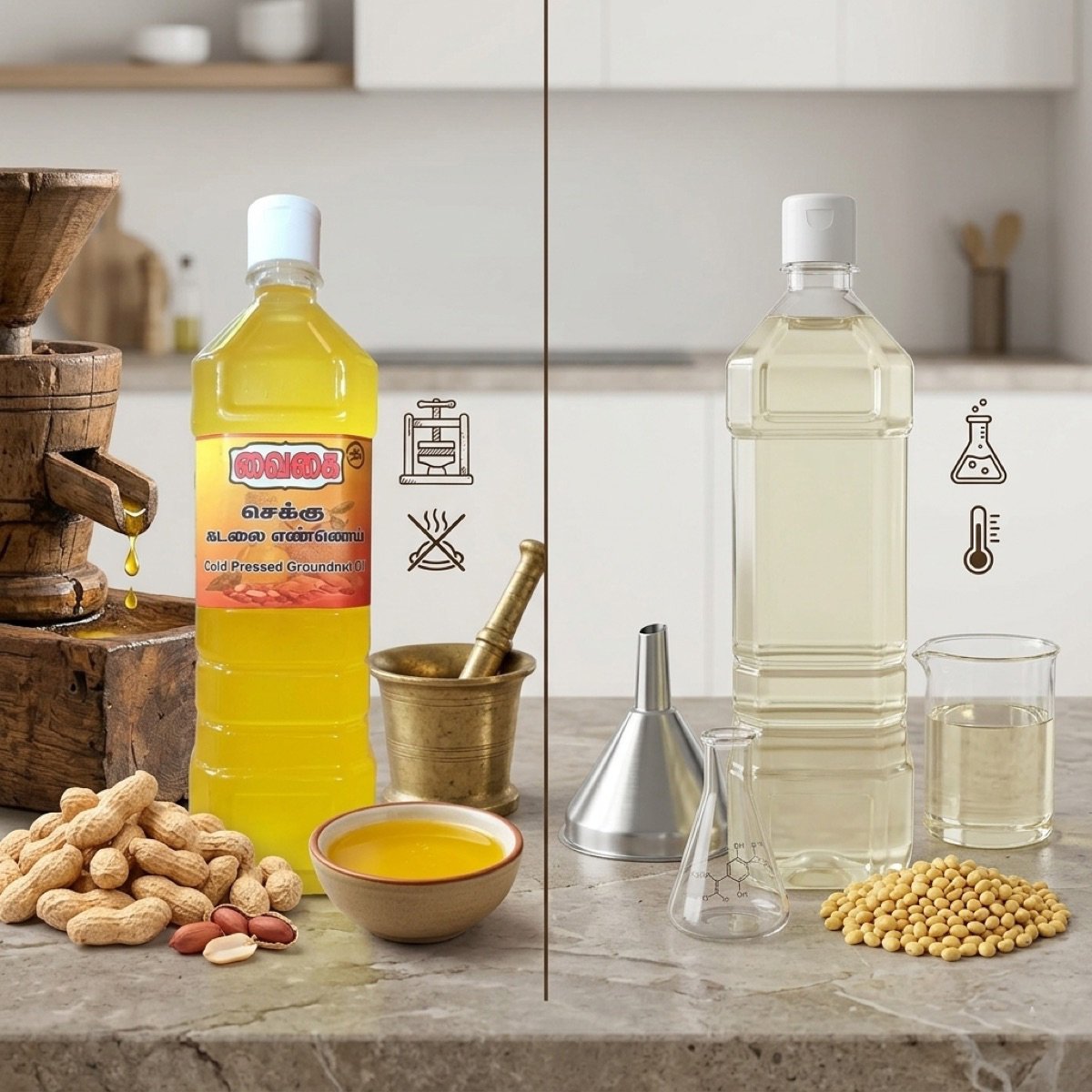
Not sure whether that bottle in your kitchen is really cold pressed? These seven differences will help you tell in under a minute.