
How To Store Cold Pressed Oil So It Stays Fresh
Unrefined oil has no preservatives, so a little care keeps it at its best. The three enemies of fresh oil and how to keep them out.
Cold-pressed (chekku) oils from Madurai · Free shipping on orders above ₹1,999
Not sure whether that bottle in your kitchen is really cold pressed? These seven differences will help you tell in under a minute.
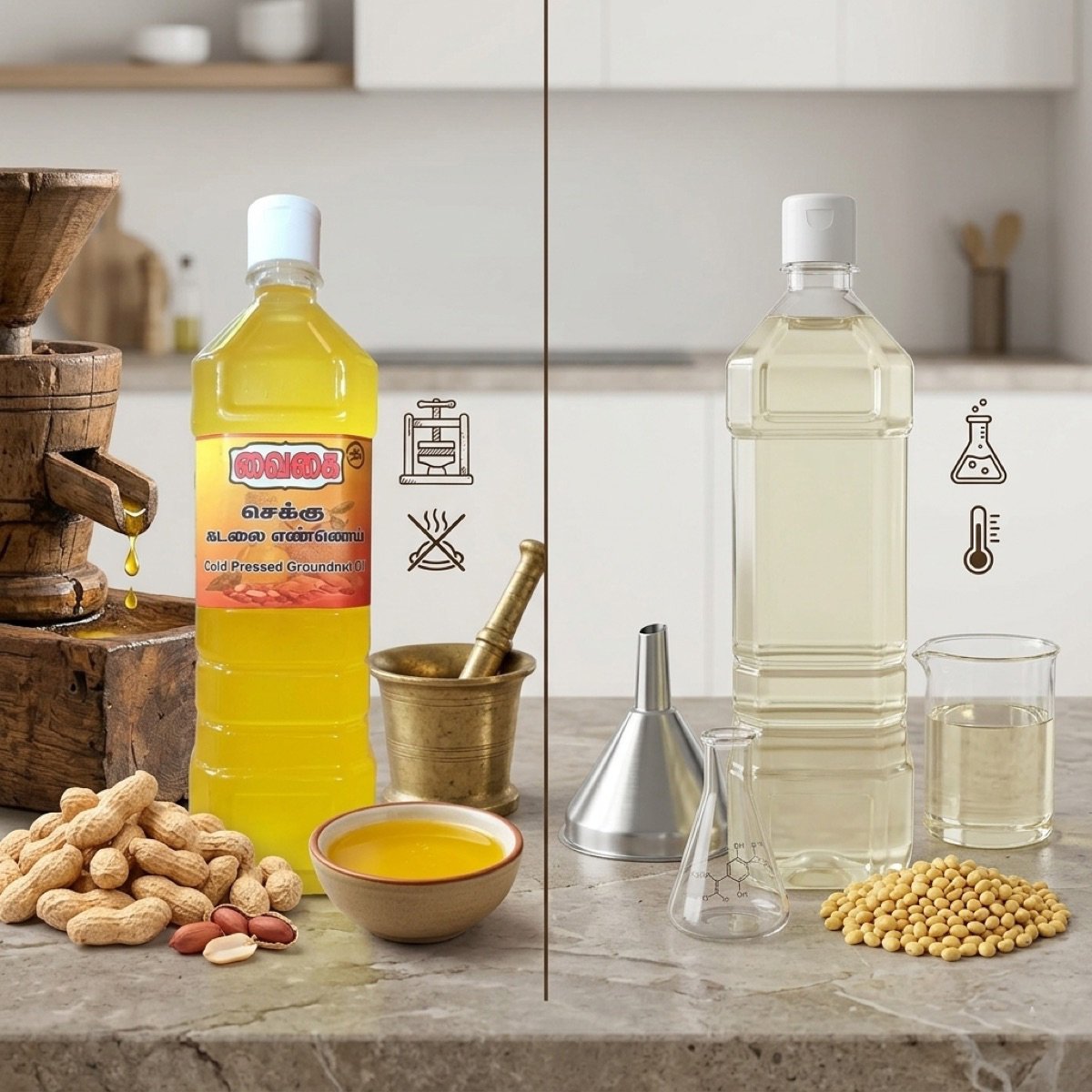
Refined oil and cold pressed oil may both be called “groundnut oil” on the shelf, but they are very different products. Here are seven checks you can do at home.
Refined oil is pale and uniform because it has been bleached. Cold pressed groundnut oil is golden yellow, gingelly oil is deep amber and coconut oil is clear but takes on a faint straw tint.
Open the cap. Refined oil smells of almost nothing – it has been deodorised with steam. Chekku oil smells of the seed it came from.
A thin layer of fine particles at the bottom of a chekku bottle is normal. Refined oil never has this because it is filtered and centrifuged repeatedly.
Cold pressed coconut oil turns solid below about 24°C, and gingelly and groundnut oil may become slightly cloudy in winter. Refined oils are often winterised to prevent this.
Chekku oil may foam a little when you first heat it, because of natural lecithin and moisture. This settles quickly. Excessive, persistent foaming is a sign of reused or adulterated oil.
Dosa made in chekku kadalai ennai has a distinct nutty finish. Refined oil is neutral – which is exactly what the refining process is designed to achieve.
Look for “cold pressed” or “chekku”, a single ingredient, an FSSAI number and the absence of words like “refined”, “antioxidant added (TBHQ)” or “E319”. Our labels list exactly one ingredient and the phrase Zero chemicals, paraffin wax, argemone oil, preservatives.
If your oil passes these seven checks, you are cooking with something close to what your grandparents used.

Unrefined oil has no preservatives, so a little care keeps it at its best. The three enemies of fresh oil and how to keep them out.
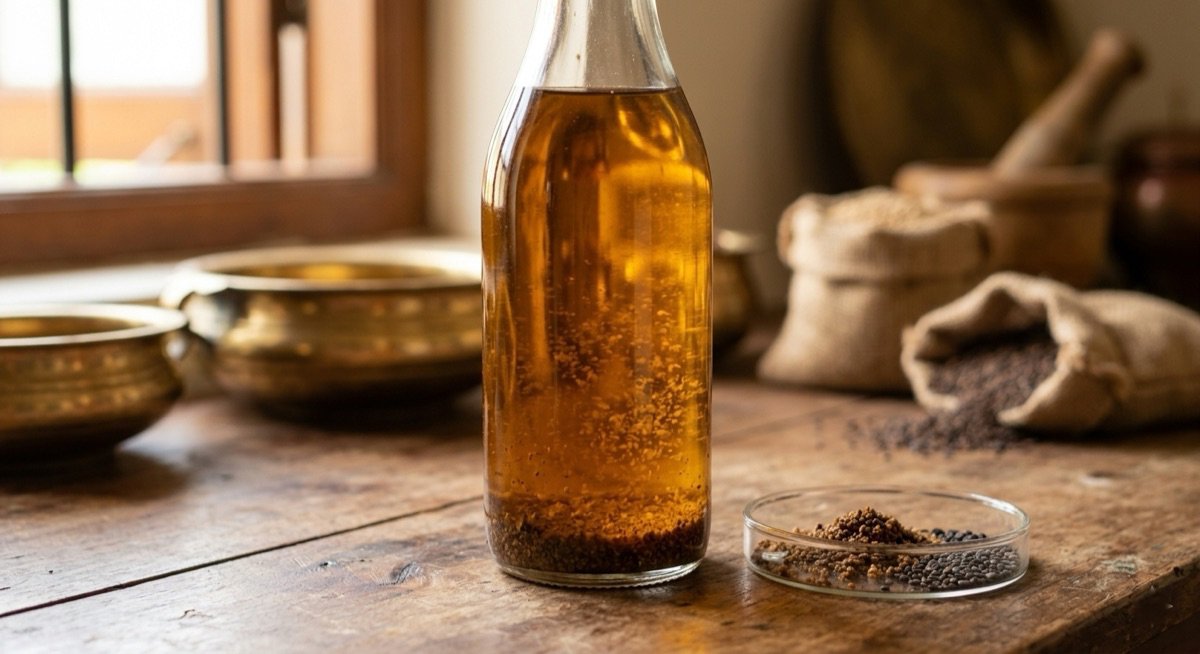
New customers sometimes worry about the fine layer at the bottom of the bottle. It is the most natural thing about the oil.
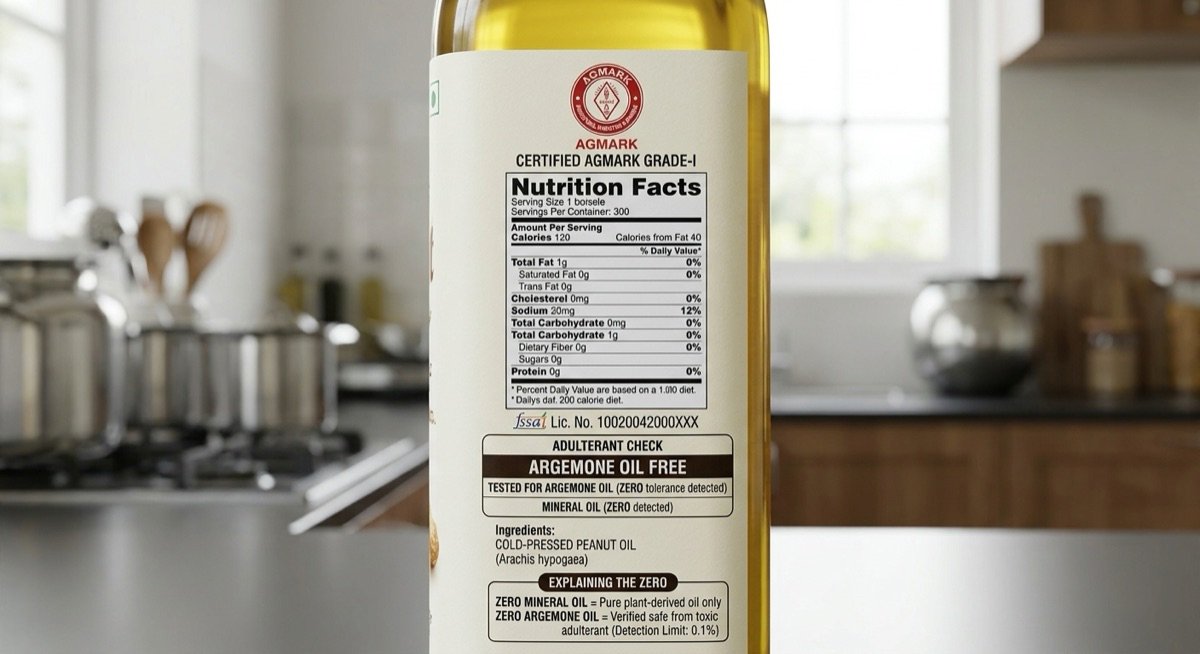
Every Vaigai label lists four things we do not add. Here is what each one is and why it matters for your family.