
Cold Pressed vs Refined Oil: 7 Differences You Can See, Smell and Taste
Not sure whether that bottle in your kitchen is really cold pressed? These seven differences will help you tell in under a minute.
Cold-pressed (chekku) oils from Madurai · Free shipping on orders above ₹1,999
New customers sometimes worry about the fine layer at the bottom of the bottle. It is the most natural thing about the oil.

Turn a bottle of chekku oil upside down and you will see a fine cloud rise from the bottom. This is sediment – tiny particles of the seed itself that passed through the cloth filter.
Sediment is mostly protein and fibre fragments from the groundnut or sesame, along with natural waxes and lecithin. In gingelly oil it is darker; in groundnut oil it is a pale beige. It is completely edible.
Refining includes degumming, centrifuging and filtering through bleaching earth specifically to remove all of this, along with colour and aroma. The result is a clear, neutral, shelf stable product – and a less nutritious one.
Groundnut and gingelly oil may look hazy on a cool morning as natural waxes thicken. Coconut oil solidifies completely below 24°C. Both return to normal as the day warms. This is a good sign: it means the oil has not been winterised or treated.
At Vaigai Oil Mills we allow the oil to settle for a day and filter it through cloth before bottling. We do not add flow agents or run it through chemical filters. What settles in your bottle is the seed – nothing else.
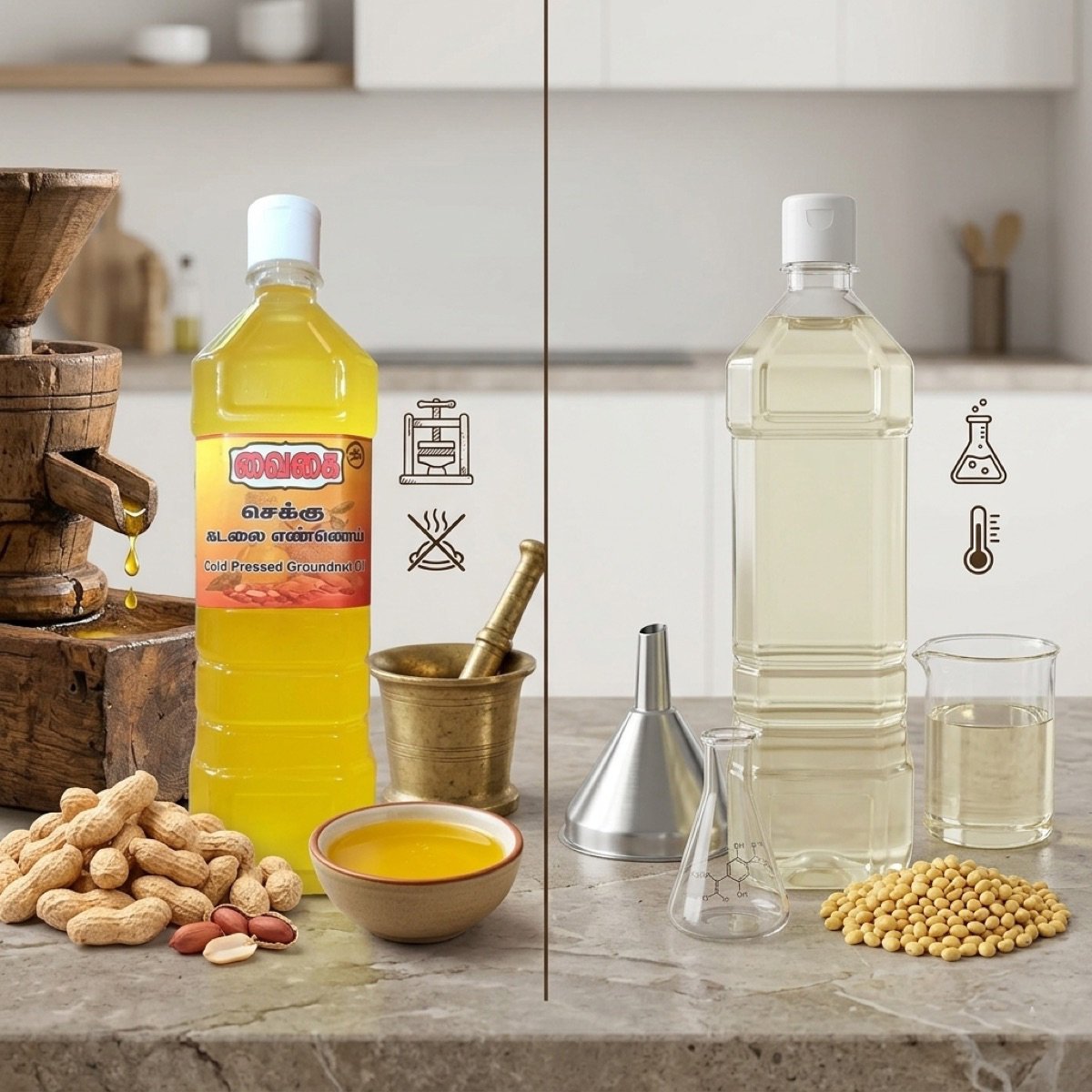
Not sure whether that bottle in your kitchen is really cold pressed? These seven differences will help you tell in under a minute.

Unrefined oil has no preservatives, so a little care keeps it at its best. The three enemies of fresh oil and how to keep them out.
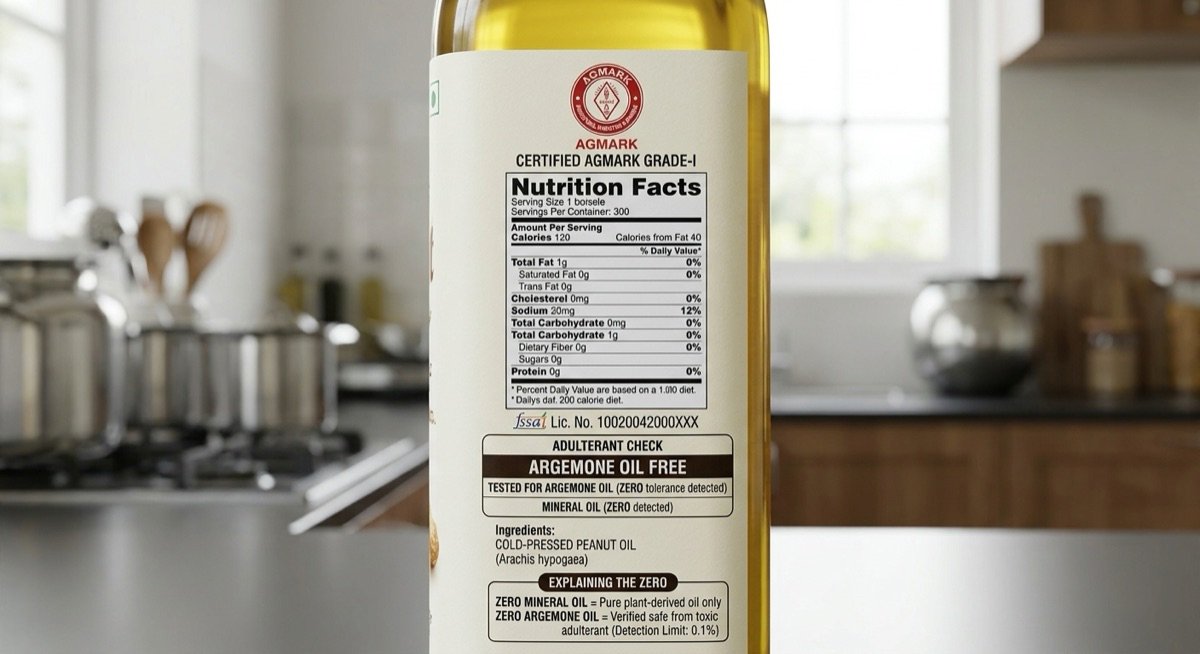
Every Vaigai label lists four things we do not add. Here is what each one is and why it matters for your family.