
Cold Pressed vs Refined Oil: 7 Differences You Can See, Smell and Taste
Not sure whether that bottle in your kitchen is really cold pressed? These seven differences will help you tell in under a minute.
Cold-pressed (chekku) oils from Madurai · Free shipping on orders above ₹1,999
Every Vaigai label lists four things we do not add. Here is what each one is and why it matters for your family.
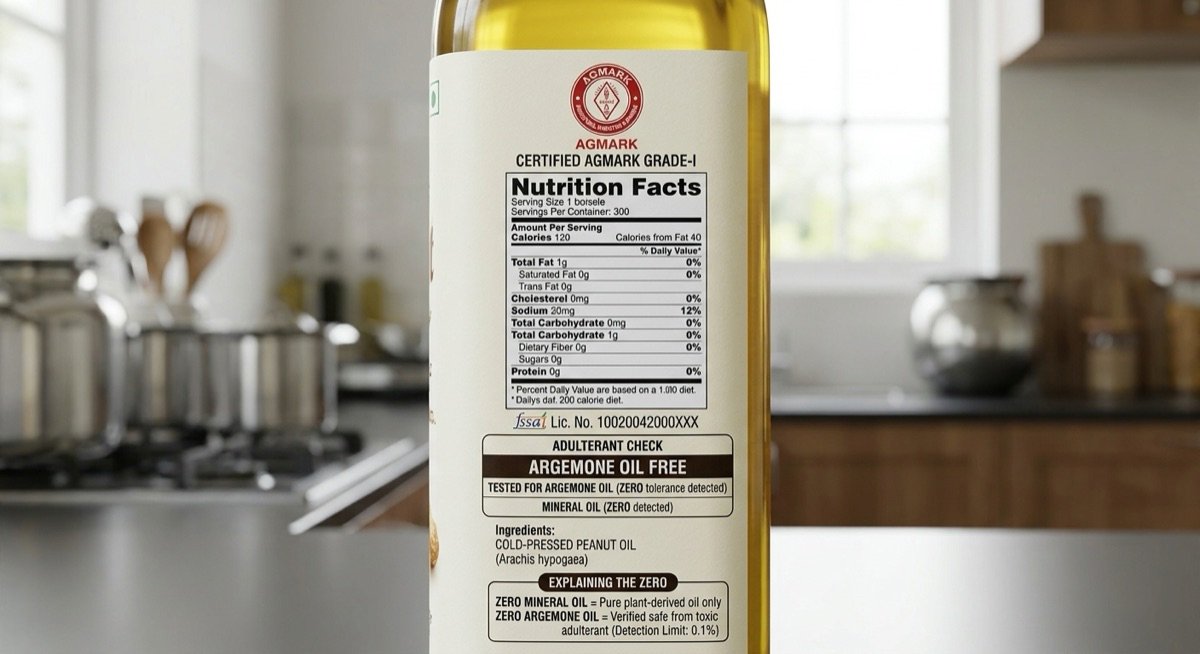
On the side of every Vaigai bottle you will see a small box: Zero – Chemicals, Paraffin Wax, Argemone Oil, Preservatives. Each word is there for a reason.
Argemone mexicana is a weed whose seeds look like mustard seeds. Its oil is toxic and has caused outbreaks of “epidemic dropsy” in India when used to adulterate mustard and other edible oils. FSSAI sets strict limits and tests for it. Because we press whole, hand-selected seeds in our own mill, there is no route for argemone to enter.
Liquid paraffin is a cheap petroleum product occasionally used to bulk out edible oils. It has no nutrition and is not digested. We use none.
Industrial refining uses hexane for extraction, caustic soda for neutralising and bleaching earth for colour removal. Cold pressing in a wooden chekku uses none of these.
Refined oils often contain TBHQ (E319) or BHA to extend shelf life. Chekku oil relies on its own natural vitamin E and antioxidants. This is why our shelf life is 6–12 months rather than two years – and why we print the packing date clearly.
Our licence number, 22422573000420, is printed on every label. You can verify any FSSAI licence on the FoSCoS portal. A missing FSSAI number on a food product is a red flag.
Groundnut oil gives about 884 kcal per 100 g with roughly 43 g monounsaturated and 33 g polyunsaturated fat; coconut oil is 87 g saturated fat; gingelly oil is around 37 g mono and 42 g polyunsaturated. These figures are on our labels so you can compare.
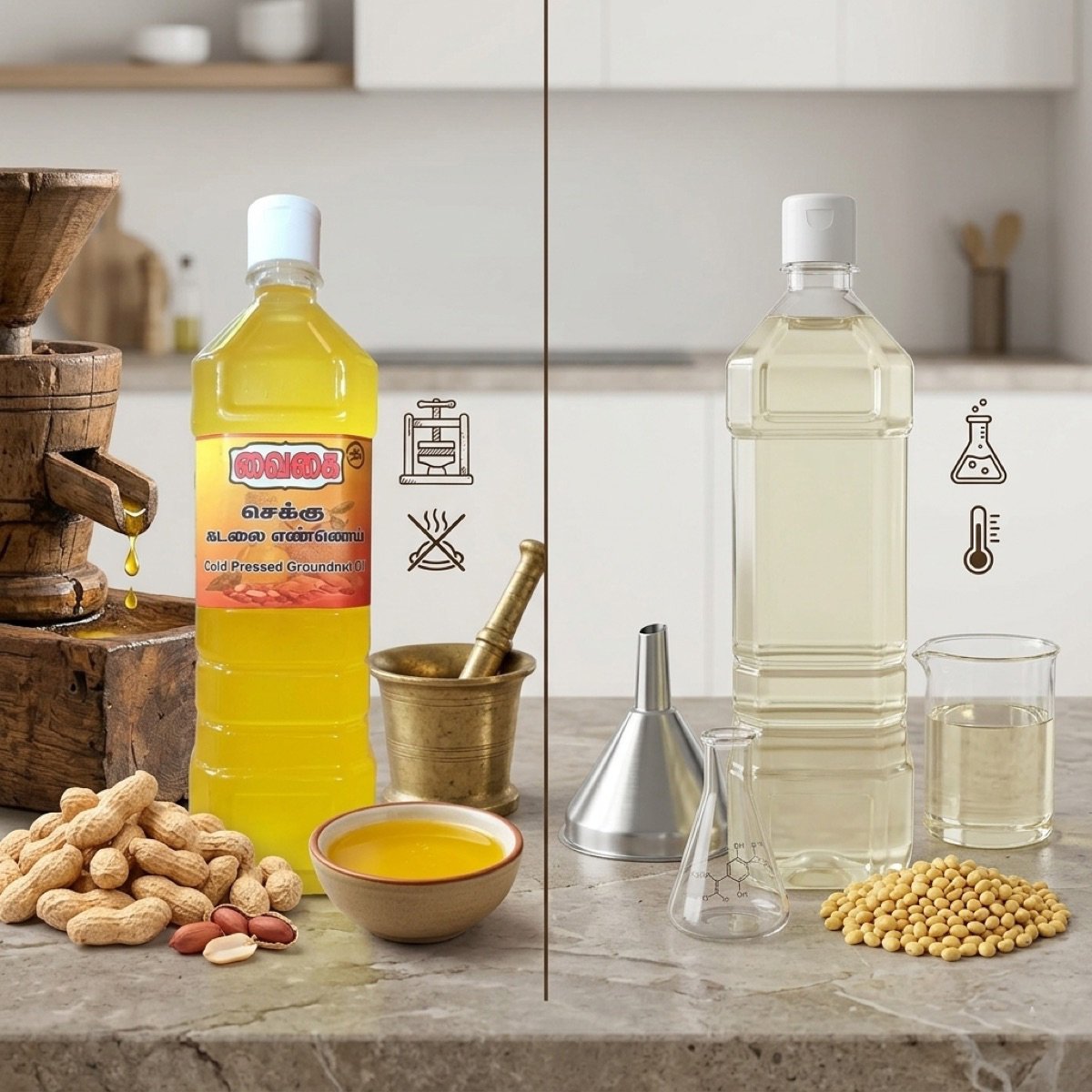
Not sure whether that bottle in your kitchen is really cold pressed? These seven differences will help you tell in under a minute.
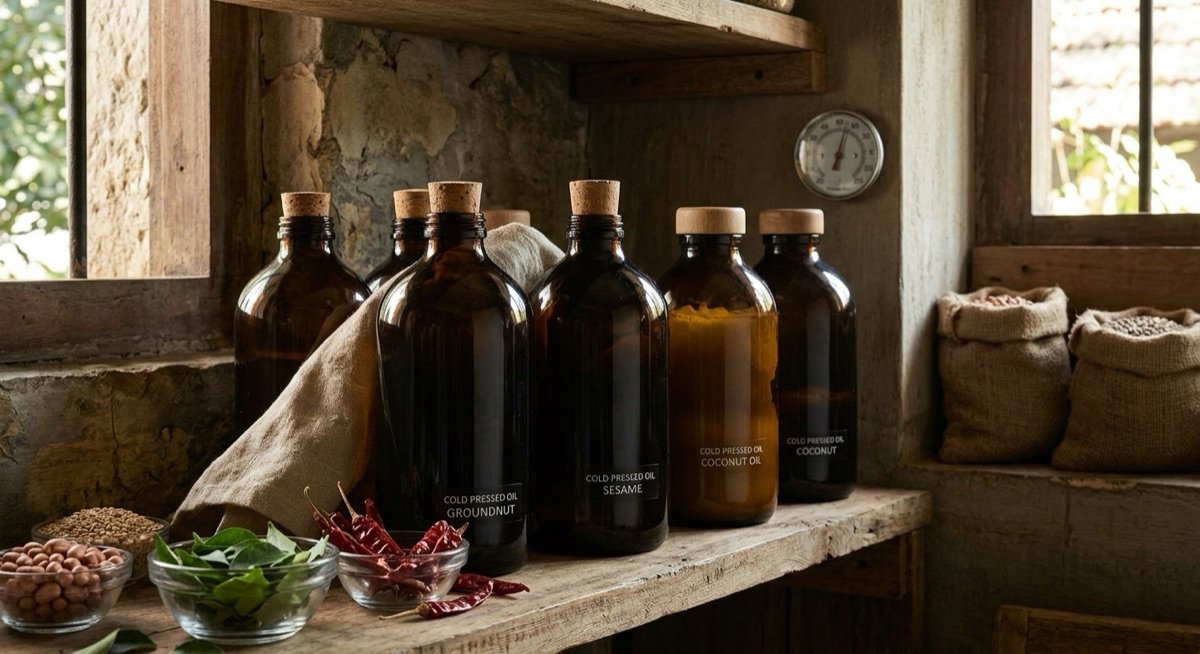
Unrefined oil has no preservatives, so a little care keeps it at its best. The three enemies of fresh oil and how to keep them out.
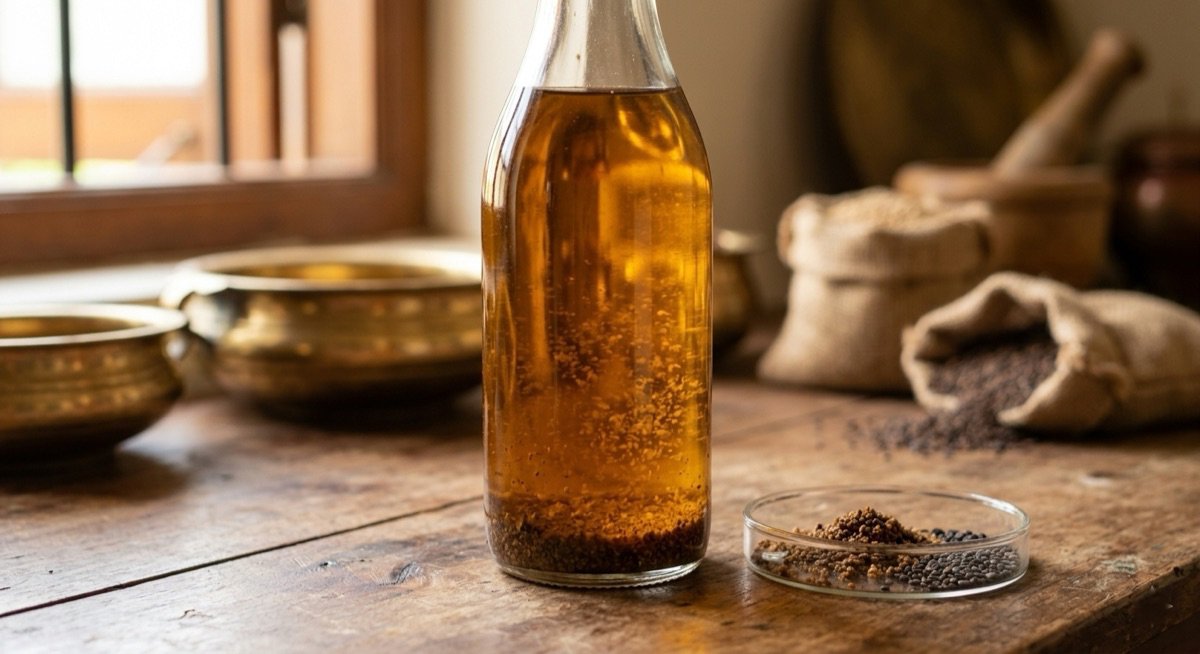
New customers sometimes worry about the fine layer at the bottom of the bottle. It is the most natural thing about the oil.