
Cold Pressed vs Refined Oil: 7 Differences You Can See, Smell and Taste
Not sure whether that bottle in your kitchen is really cold pressed? These seven differences will help you tell in under a minute.
Cold-pressed (chekku) oils from Madurai · Free shipping on orders above ₹1,999
Unrefined oil has no preservatives, so a little care keeps it at its best. The three enemies of fresh oil and how to keep them out.

Cold pressed oil is a living food. It carries natural antioxidants that protect it, but it has none of the synthetic preservatives (TBHQ, BHA) added to refined oil. Three things shorten its life: light, heat and air.
Keep the bottle in a cupboard or a dark corner of the kitchen. Never store oil on a windowsill or next to the stove where the sun reaches it.
Room temperature is fine. Avoid storing oil above the stove or near the oven. In peak summer, a cooler room or a lower shelf helps. There is no need to refrigerate, but you may refrigerate coconut oil if you prefer it solid.
Close the cap tightly after every use. If you buy a 5 L can, decant into a smaller bottle for daily use and keep the can sealed. Oxygen is what turns oil rancid.
| Oil | Shelf life from packing |
|---|---|
| Groundnut (kadalai) | 6 months |
| Gingelly (nallennai) | 9 months |
| Coconut (thengai) | 9 months |
| Castor / Illuppai | 12 months |
A sharp, paint-like or crayon smell, a bitter taste, or a sticky residue on the bottle neck. Small sediment and cloudiness in cold weather are not spoilage.
Every Vaigai bottle carries the packing date and use-by date on the label. Buy what you will use within a couple of months and it will always taste fresh.
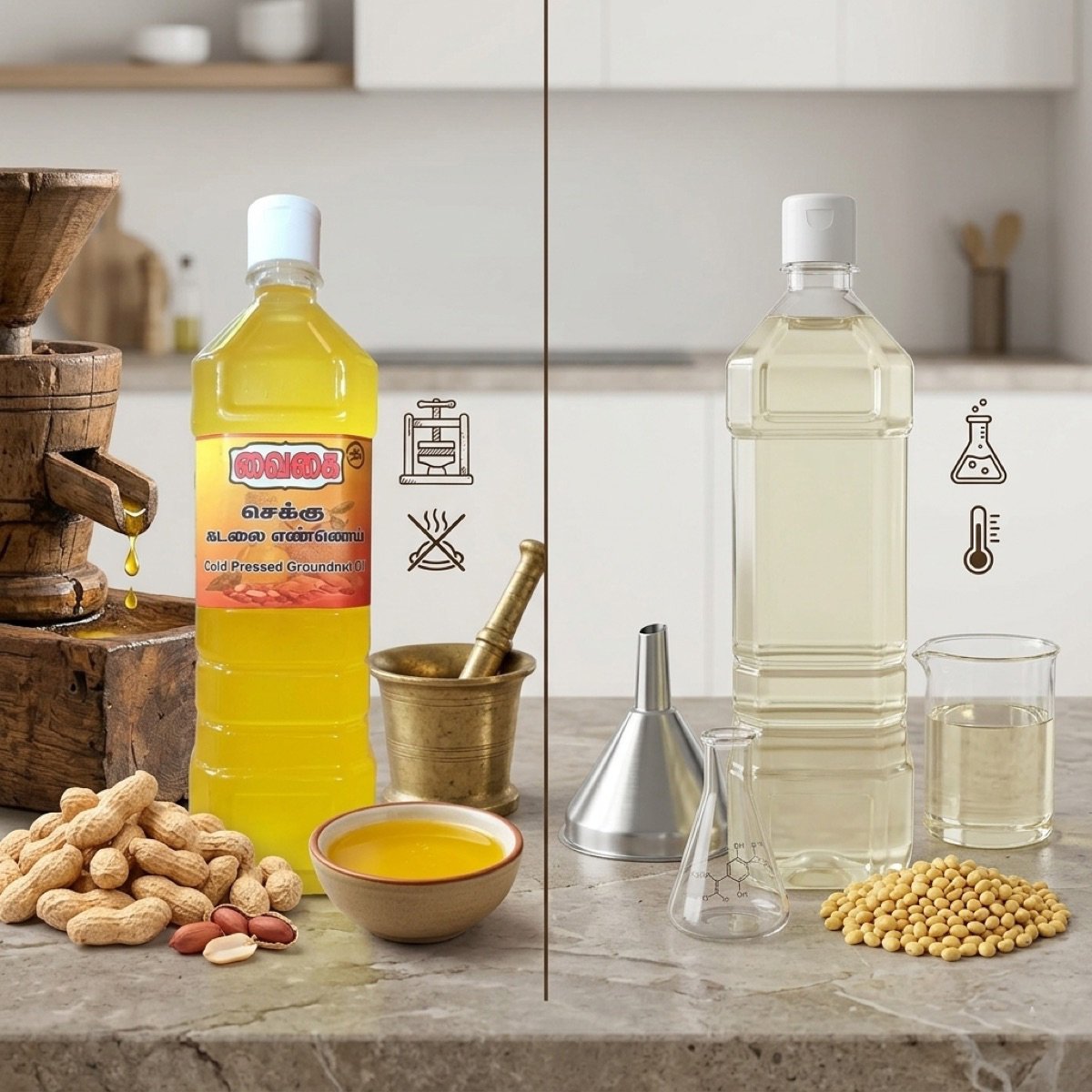
Not sure whether that bottle in your kitchen is really cold pressed? These seven differences will help you tell in under a minute.

New customers sometimes worry about the fine layer at the bottom of the bottle. It is the most natural thing about the oil.
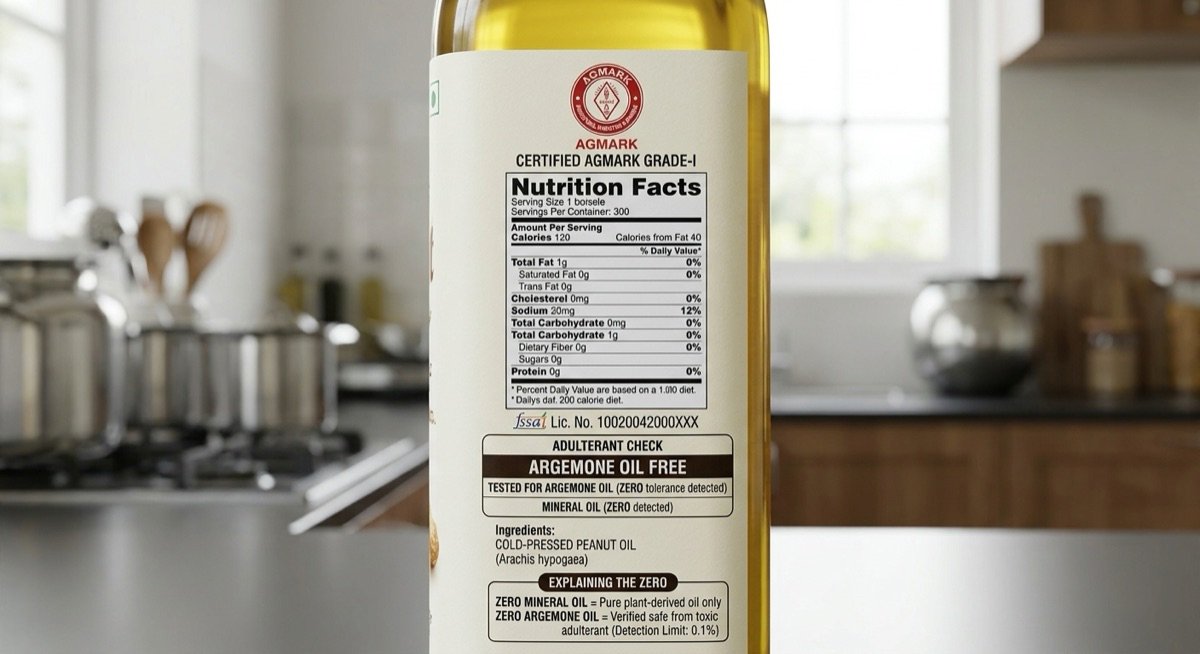
Every Vaigai label lists four things we do not add. Here is what each one is and why it matters for your family.